Relational-Integrative EMDR is a transpersonal framework for therapists ready to move beyond protocol, into the embodied, relational and spiritual dimensions of trauma healing.
Developed by Michele Bowes and Amy English, RI-EMDR is delivered as a lived experience, not simply taught as a technique. It asks a therapist to know the model through their own felt experience of it, before ever bringing it into the therapy room.
What RI-EMDR Is
RI-EMDR is a powerful therapeutic approach that combines the proven effectiveness of attachment-informed EMDR with the depths of parts work, neuroscience, and the brain-mind-body connection, alongside mindfulness-based practices. This has led to a compassionate, transpersonal and spiritual approach that honours relational attachment and its ruptures. By honouring these, clients are supported to heal from past wounds, improve current relationships, and build healthier attachments in the future.
RI-EMDR is a whole-person, whole-system approach that works within the standard EMDR protocol whilst holding space for the relational field, the body, the ancestors, the spirit, and the parts.
It was developed for EMDR therapists working with complex and intergenerational trauma, those who know that what heals is not just the technique, but the trust between therapist and client, and the depth of presence the therapist brings.
RI-EMDR holds the whole of what a client brings into the room: the nervous system and its history of attachment, the parts formed to protect and survive, the ancestral and intergenerational threads that shape a life, and the spiritual dimensions that standard protocol was never built to hold. Reprocessing happens inside all of this, not apart from it.
A Relational Foundation
In RI-EMDR, healing happens not only through reprocessing memory, but through the relationship in which that reprocessing takes place. The courage of the therapist, and the trust between therapist and client, are held as central to the work itself, not as a backdrop to the protocol but as part of what makes reprocessing possible at all.
What You’ll Experience
Both Part 1 and Part 2 are offered in person and online, each with its own experience of the training.
In Person
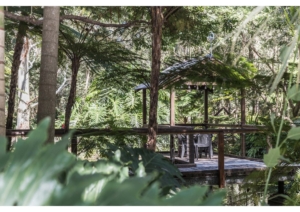
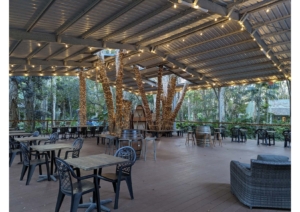
Held in a beautiful retreat-style location, surrounded by nature, the in-person training includes:
- Immersive Breathwork
- Sound Healing
- Chef-catered meals
Online
The online training includes:
- Sound Healing
Who This Training Is For
- Part 1: EMDR-trained Therapists with hands-on experience integrating EMDR into their clinical practice.
Part 2: Therapists who have completed RI-EMDR Part 1 and are ready to extend the model into intergenerational, collective and spiritual depthPre reqs: trained in Basic EMDR and have an interest/understanding of parts work

Some of the most profound healing happens not in the mind alone, but in the spaces between: between therapist and client, between the self and its many parts, and between clinical knowledge and ancient wisdom.
RIPT (Relational Integrative Parts Therapy) was developed by Michele Bowes and Amy English to honour all of those spaces. As Clinical Resource Therapy Trainers Michele and Amy felt the need to expand on this modality to fit what they were seeing in their clinical work and trainings with RI-EMDR.
Drawing on Resource Therapy, Internal Family Systems, Somatic Experiencing, Imagery Rescripting, Bilateral Stimulation, Process-Oriented Psychology, spiritual traditions, and Indigenous wisdom, RIPT offers clinicians a rich, clinically robust framework for working with the internal world. One that holds parts, introjects, fear-based energies and entities, and the transpersonal dimensions of the psyche with equal curiosity and care.
RIPT is an integrative model for working with the internal world, one that holds the clinical and the spiritual as equally valid dimensions of healing.
It offers a way of understanding and working with the many facets of the internal system: parts formed through lived experience, introjects absorbed from others, micro-fragments held from early or developmental trauma, and the fear-based energies and entities that can attach to or influence the system when it has been overwhelmed.
RIPT also makes space for what sits beyond the personal: intergenerational and ancestral patterns, and the soul or eternal self, understood as a dimension of a person that remains untouched by trauma even as the rest of the system carries its weight. Healing, in this model, is never only psychological. It is relational, somatic and spiritual, held together as one continuous process rather than separate strands of work.
What You’ll Experience
This is an immersive training, not a lecture. The Foundation Certificate is offered both in person and online, each with its own experience of the training.
In Person
Held in a beautiful retreat-style location, surrounded by nature, the in-person training includes:
- Immersive Breathwork
- Sound Healing
- Chef-catered meals
Online
The online training includes:
- Sound Healing
Held for a small group of no more than 20 participants and co-facilitated throughout by two Clinical Resource Therapist Trainers, the training is designed to give every participant space to learn, practise and be genuinely held in the process.
Who This Training Is For
RIPT Foundation Certificate is suited to:
- Therapists and Psychologists
- Counsellors
- Allied Health Professionals
- Educators
- Organisations supporting trauma-informed practice
No prior training in Resource Therapy or IFS is required, though clinicians with an existing parts-work background will find natural points of connection
Want to know more? please email us at hello@sevatraining.com.au (We are holding in person, online (3 day) If interested in booking please visit our website www.sevatraining.com.au
MASTERCLASSES
Fear Based Energies/Entities and Soul Work Master Class
Working with the Porous Mind, Guides and the Soul: Recognising, Releasing and Restoring
Advanced Training | For Therapists Trained in RI-EMDR, RIPT, IFS or Clinical Resource Therapy
Led by Michele Bowes and Amy English across 3 immersive days, offered in person and online
Prerequisite: completion of RI-EMDR Part 1 and Part 2, and/or Relational Integrative Parts Therapy (RIPT), Internal Family Systems (IFS), or Clinical Resource Therapy.
Understanding Fear Based Energies and Entities
Fear Based Energies and Entities (FBEs) are not parts of a client’s own system. They are foreign presences that have attached to a client’s energetic or psychological field, often during a moment of vulnerability, and they do not originate from the client’s own protective responses. This distinction matters: an introject is an impression of a person; an FBE is a presence in its own right, with no personal history belonging to the client at all.
FBEs sit along a spectrum rather than in two fixed boxes. Fear Based Energies are typically diffuse: sudden overwhelming floods of a single state, sensations with no personal narrative attached, or resistance to parts work that arises from nowhere and does not soften with the ordinary tools of curiosity and compassion. Fear Based Entities have greater form, coherence and apparent intentionality, presenting as a distinct voice, figure or inner presence that feels clearly other, sometimes issuing commands or demands that do not feel like any part of the client’s own system.
Guides and Soul Work
This territory holds two connected pieces of work. The first is a Soul Retrieval – restoring a lost part of the client’s own essence to where it belongs. The second is Passage Work, supporting a Lost Soul or Lost Spirit, a presence that is not the client’s own, toward its own passage onward. Both are held with the same unhurried, compassionate and rigorously assessed clinical stance, drawing on a shamanic soul retrieval lineage stretching through traditions such as those described by Sandra Ingerman and William Baldwin, adapted into our own clinical language.
Lost Souls carry something like personhood: a sense of who they were, what they experienced, and why they remain. Lost Spirits are more diffuse, disincarnate presences without clear personhood or story, sometimes unaware of where or what they are. In cult and ritual abuse contexts, Lost Souls may include others who were harmed within the same perpetrating system, carrying their own unfinished grief into the client’s field.
This work also makes space for guides and ancestors: the wise, protective and nurturing presences that can appear within a client’s system and be drawn on as genuine resources. Passage Work itself is never rushed and never forced. It is not exorcism. There is no drama, no urgency, only the same quality of compassionate, regulated presence held throughout all of this work, extended into the spiritual dimension
RAMCOA Master Class
Working with Survivors of Ritual Abuse, Mind Control and Organised Abuse
Advanced Training | For Trauma-Informed Therapists and Psychologists
Led by Michele Bowes and Amy English across 3 immersive days, offered in person and online
Prerequisite: Completion of RI-EMDR part 1 and part 2 training/and/or Relational Integrative Parts Therapy Training/IFS/Clinical Resource Therapy.
Understanding RAMCOA
RAMCOA is an umbrella term encompassing Ritual Abuse, Mind Control and Organised Abuse: forms of severe, systematic trauma inflicted through deliberate programming and control techniques. This type of abuse is characterised by its organised, intentional nature, often involving multiple perpetrators working within structured groups or networks. Ritual abuse may include ceremonies or repeated practices designed to terrorise and control, while mind control involves sophisticated techniques to fragment consciousness, install programmed responses, and create internal systems that serve the perpetrators’ purposes. Organised abuse refers to abuse perpetrated by multiple people acting in concert, whether within families, institutions, trafficking networks, or other organised structures such as Defence.
Survivors of RAMCOA typically present with complex dissociative disorders, as the systematic nature of the abuse deliberately creates and exploits dissociation as a survival mechanism. This intentional fragmentation and programming is what distinguishes RAMCOA from other forms of complex trauma, and it is why working with survivors calls for specialised knowledge, careful pacing, and robust safety planning
Want to know more? please email us at hello@sevatraining.com.au (We are holding in person, online (3 day) If interested in booking please visit our website www.sevatraining.com.au